Before you start
What this method is trying to achieve
Pan-seared chicken breast is less about a magic cooking time than managing thickness and heat. Flatten the thick end so the meat cooks more evenly, dry the surface for browning, then reduce the heat if the crust is ready before the center is safe. A thermometer decides the endpoint.
Success looks like
Know the target before you cook
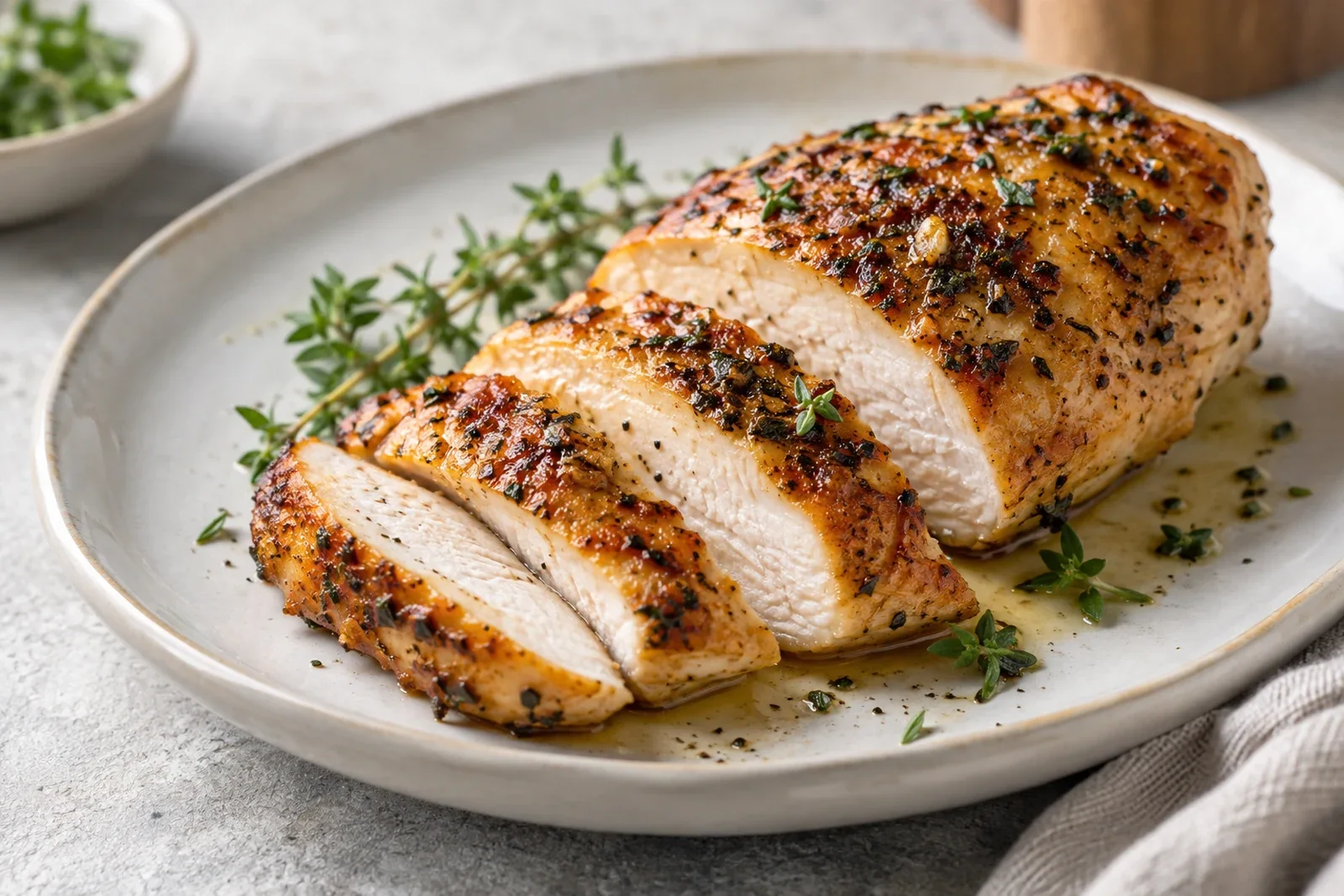
The chicken should have a deeply golden surface and an opaque, moist interior that slices cleanly without a dry cottony texture. The thickest point must reach at least 165°F / 73.9°C.
Ingredients
What you need
Chicken
- 4 pieces boneless skinless chicken breasts, about 150 to 180 g / 5 to 6 oz each
- 1 tsp kosher salt — Adjust to salt crystal size and taste.
- 1/2 tsp black pepper, freshly ground
- 1 tsp sweet paprika — Optional; helps color and adds mild flavor.
Pan
- 2 tbsp olive oil
Finish
- 1 tbsp unsalted butter — Optional.
- 2 cloves garlic, lightly crushed — Optional.
- 4 sprigs fresh thyme — Optional.
Method
Cook by the cues, not just the clock
Even and dry
Place the chicken between sheets of parchment or plastic and gently pound only the thick end until each breast is about 2 cm / 3/4 inch thick at its thickest point. Pat very dry and season with salt, pepper and paprika.
First side
Heat a heavy skillet over medium-high heat until hot, add the oil, then lay in the chicken without crowding. Cook without moving until the first side is well browned, about 4 to 5 minutes.
Second side
Turn the chicken. Reduce the heat to medium and cook until the second side is browned and the thickest part approaches the safe endpoint, about 4 to 6 minutes depending on thickness. If using butter, garlic and thyme, add them during the final few minutes and spoon the foaming butter over the chicken.
Verify and rest
Check the thickest part of each breast with a food thermometer and continue cooking until it reaches at least 74°C / 165°F. Rest the chicken for 5 minutes before slicing.
Critical checkpoints
Stop here and check
Before the pan: is the thickness reasonably even?
The thick end has been flattened enough that the piece no longer has a large wedge-shaped difference.Pound only the thick portion more before cooking.
Mid-cook: browned outside but center still cool?
The crust is already dark golden while the thermometer is still well below the safe endpoint.Turn the heat down and finish more gently instead of pushing the crust darker.
At removal: did the thickest part reach 165°F / 73.9°C?
The thermometer reads at least the USDA safe minimum at the thickest point.If not, return the chicken to medium or medium-low heat and recheck after a short interval.
If yours looks different
Route the failure before changing the recipe
After cooking
Storage, reheating & substitutions
Storage
Cool promptly, refrigerate covered and use within 3 to 4 days.
Reheating
Reheat gently with a splash of broth in a covered skillet or low oven. High heat can make already-cooked breast meat tougher.
Substitutions
Use another neutral high-heat cooking oil in place of olive oil. Dried herbs can replace fresh herbs in smaller amounts.
Evidence
Sources & methodology
Technical claims and method decisions are tied to sources. Recipe-specific advice is not presented as a universal food-science law.
- Pan-Seared Mediterranean ChickenFood Network
Food Network uses a hot skillet to brown boneless skinless chicken before finishing it more gently with liquid, illustrating the value of separating browning from the final cook-through.
publisherPassage verified - To what internal temperature should I cook poultry?USDA Food Safety and Inspection Service
USDA FSIS states that poultry should reach a safe minimum internal temperature of 165°F (73.9°C) measured with a food thermometer.
governmentPrimary source