Before you start
What this method is trying to achieve
Marry Me Chicken works best when the chicken and sauce are treated as two different systems. Brown the chicken first, build the sauce in the same skillet, then finish the chicken gently in the sauce only until it reaches a safe internal temperature. Parmesan goes in over gentle heat so the sauce stays creamy instead of turning oily or grainy.
Success looks like
Know the target before you cook
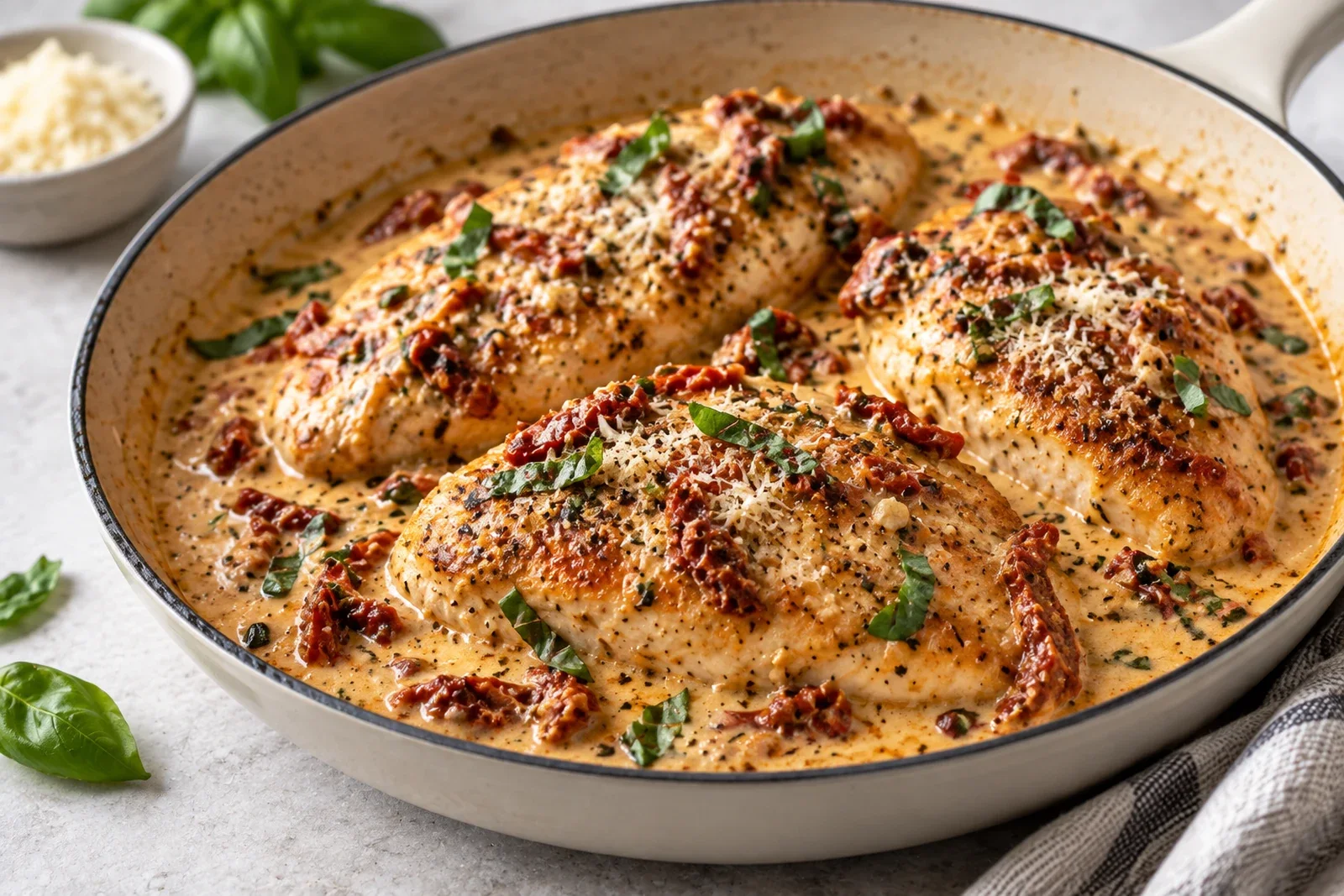
The chicken should be browned outside, fully cooked but still moist inside, and coated in a smooth cream sauce that clings lightly to a spoon without separating into pools of oil.
Ingredients
What you need
Chicken
- 4 pieces boneless skinless chicken breasts, about 150 to 180 g / 5 to 6 oz each, patted dry — If very thick at one end, pound gently to a more even thickness.
- 1 tsp kosher salt — Adjust to taste and salt crystal size.
- 1/2 tsp black pepper, freshly ground
- 2 tbsp olive oil
Sauce
- 1 small shallot, finely sliced
- 3 cloves garlic, minced
- 240 ml low-sodium chicken broth
- 100 g oil-packed sun-dried tomatoes, drained and sliced
- 180 ml heavy cream
- 1 tsp dried oregano
- 1/4 tsp red pepper flakes — Optional.
Finish
- 55 g Parmesan cheese, finely grated — Finely grated cheese melts more smoothly.
- 15 g fresh basil, thinly sliced
Method
Cook by the cues, not just the clock
Even the chicken
Pat the chicken dry and gently pound any very thick ends so each breast has a reasonably even thickness. Season with salt and pepper.
Sear
Heat the olive oil in a large skillet over medium-high heat. Add the chicken and cook without moving until the first side is golden, about 4 to 5 minutes. Turn and brown the second side for 3 to 4 minutes, then move the chicken to a plate; it does not need to be fully cooked yet.
Build sauce
Lower the heat to medium. Cook the shallot until softened, then add the garlic for about 30 seconds. Pour in the broth and scrape up the browned bits. Add the sun-dried tomatoes, cream, oregano and red pepper flakes and bring only to a gentle simmer.
Finish chicken
Return the chicken and any collected juices to the skillet. Simmer gently, turning once if needed, until the thickest part of every breast reaches at least 74°C / 165°F on a food thermometer.
Finish sauce
Reduce the heat to low. Stir in the finely grated Parmesan a little at a time until the sauce is smooth, then add basil. Taste and adjust seasoning before serving.
Critical checkpoints
Stop here and check
Before searing: are the breasts close to even thickness?
The thickest and thinnest areas are reasonably similar rather than dramatically tapered.Gently pound the thick end between sheets of parchment or plastic before cooking.
At the finish: did every breast reach 165°F / 73.9°C?
A food thermometer in the thickest part reads at least the USDA safe minimum for poultry.If below 165°F, continue the gentle sauce simmer and recheck. Avoid turning the heat to maximum.
After Parmesan: is the sauce smooth rather than oily?
The sauce looks cohesive and creamy, with no grainy clumps or slick pools of separated fat.Keep the heat low and add cheese gradually. If it has already separated, follow CookClue's cheese-sauce diagnosis for recovery logic.
If yours looks different
Route the failure before changing the recipe
Why Is My Chicken Breast Tough?
Why Did My Cheese Sauce Split?
After cooking
Storage, reheating & substitutions
Storage
Cool promptly and refrigerate in a covered container for up to 3 days.
Reheating
Reheat gently over low heat with a splash of broth or cream. Avoid a hard boil, which can tighten the chicken and destabilize the sauce.
Substitutions
Chicken cutlets can be used for faster cooking; reduce the finishing time accordingly. Half-and-half is more prone to thinning or splitting than heavy cream and is not a direct one-for-one stability substitute.
Evidence
Sources & methodology
Technical claims and method decisions are tied to sources. Recipe-specific advice is not presented as a universal food-science law.
- Marry Me ChickenFood Network Kitchen
Food Network's current Marry Me Chicken method sears chicken, builds a broth-cream-sun-dried-tomato sauce in the same skillet, and finishes the chicken in the sauce.
publisherPassage verified - To what internal temperature should I cook poultry?USDA Food Safety and Inspection Service
USDA FSIS states that poultry should reach a safe minimum internal temperature of 165°F (73.9°C) measured with a food thermometer.
governmentPrimary source