Before you start
What this method is trying to achieve
Simple buttercream can fail in two different ways: the frosting itself can stay gritty, or a perfectly good frosting can slide because the cake or room is too warm. Sift the sugar, add it in stages with the liquid and beat only until the frosting is light and smooth. Then apply it to completely cooled cake layers.
Success looks like
Know the target before you cook
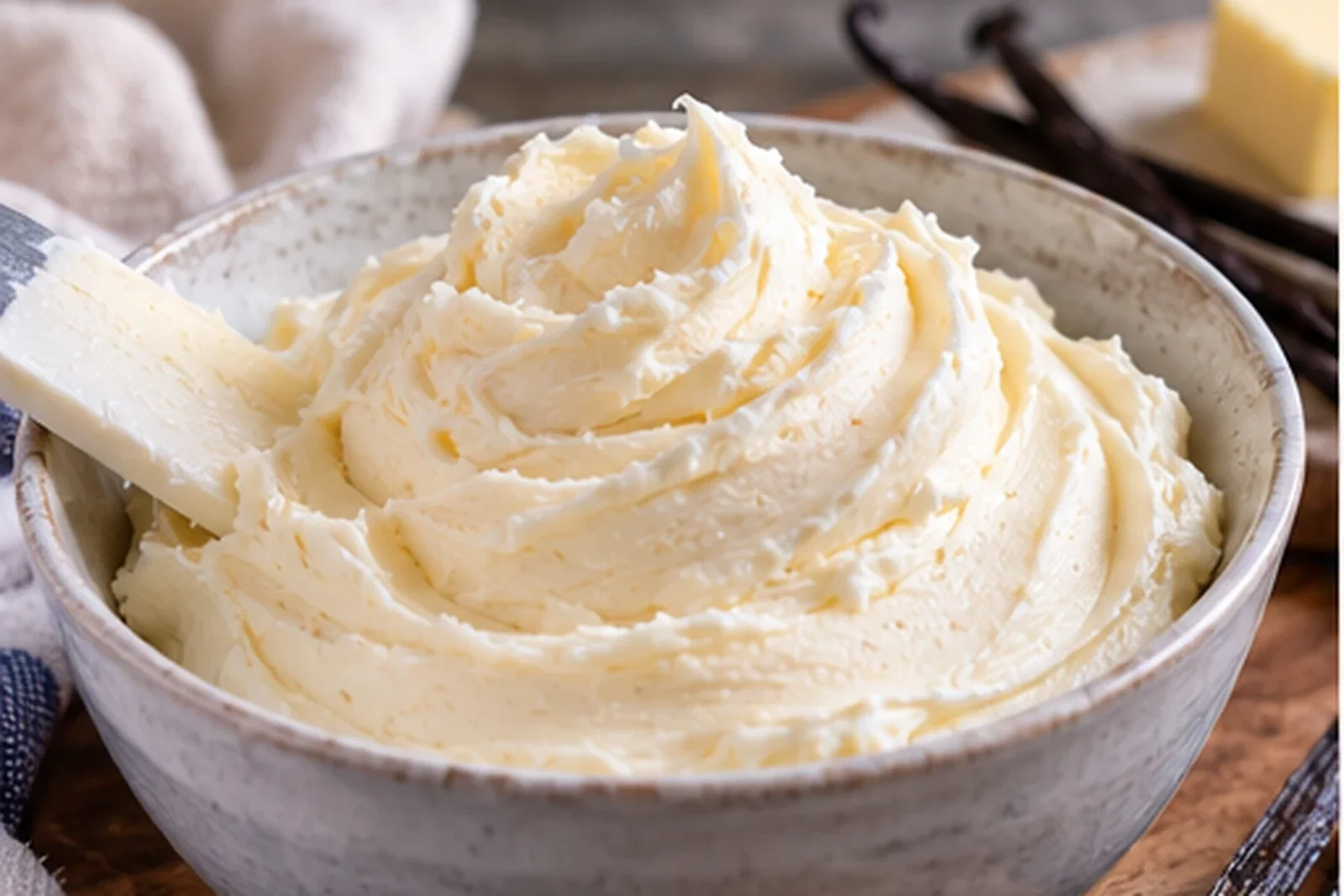
The frosting should be light, fluffy and smooth enough to spread without visible sugar lumps while still holding a soft peak on a spatula.
Ingredients
What you need
Frosting
- 85 g unsalted butter, softened to cool room temperature
- 60 g vegetable shortening — Supports firmness in warmer conditions.
- 1/8 tsp fine salt
- 500 g confectioners' sugar, sifted — Keep a little extra available only if the frosting needs more body.
- 2 tsp vanilla extract
- 60 ml whole milk or heavy cream, room temperature — Add gradually; you may not need every drop.
Method
Cook by the cues, not just the clock
Base
Beat the butter, shortening and salt until creamy and fluffy.
First sugar addition
Add about half the sifted confectioners' sugar on low speed and mix until fully blended.
Add flavor and liquid
Beat in the vanilla and about half the milk or cream until smooth and fluffy.
Finish consistency
Alternate the remaining sugar and only as much remaining milk as needed until the frosting is smooth, light and spreadable.
Use on cool cake
Spread or pipe onto completely cooled cake or cupcakes. If the frosting feels too soft to hold its shape, chill it briefly before decorating.
Critical checkpoints
Stop here and check
After mixing: smooth or sandy?
The frosting feels smooth when rubbed lightly between clean fingertips, with no obvious coarse sugar grit.Use sifted confectioners' sugar and give the mixture time to fully hydrate before adding more dry sugar.
Before frosting the cake: are the layers fully cool?
The cake no longer feels warm at the center or surface.Wait until completely cool before frosting; warmth can soften the fat enough for the layers to move.
On the cake: is the frosting firm enough to hold a soft peak?
A spatula lift leaves a soft peak instead of a flowing ribbon.If too soft, chill briefly before application rather than adding large amounts of sugar automatically.
If yours looks different
Route the failure before changing the recipe
Why Is My Buttercream Grainy?
Why Is My Frosting Sliding Off My Cake?
After cooking
Storage, reheating & substitutions
Storage
Cover and refrigerate if not using the same day. Bring back toward cool room temperature and rebeat briefly before spreading.
Reheating
Do not heat buttercream. If too firm from refrigeration, let it soften gradually at room temperature.
Substitutions
Using part vegetable shortening creates a firmer frosting in warmer conditions; all-butter frosting has a stronger butter flavor but softens more readily.
Evidence
Sources & methodology
Technical claims and method decisions are tied to sources. Recipe-specific advice is not presented as a universal food-science law.
- Easy Vanilla Buttercream FrostingKing Arthur Baking
King Arthur's current easy vanilla buttercream uses room-temperature butter plus shortening, sifted confectioners' sugar, vanilla and milk or cream, added in stages and beaten until light and fluffy.
publisherPassage verified - Quick Buttercream FrostingKing Arthur Baking
King Arthur notes that replacing some butter with vegetable shortening makes a simple buttercream firmer in warmer conditions, while optional meringue powder can add holding power.
publisherPassage verified