Before you start
What this method is trying to achieve
Swiss meringue buttercream is an emulsion with a narrow temperature window. Heat the whites and sugar until the sugar is dissolved and the mixture reaches 161°F, whip until the meringue is stiff and the bowl has cooled, then add butter gradually. If the frosting becomes soft, lumpy or temporarily broken, diagnose temperature before changing the ingredient ratio.
Success looks like
Know the target before you cook
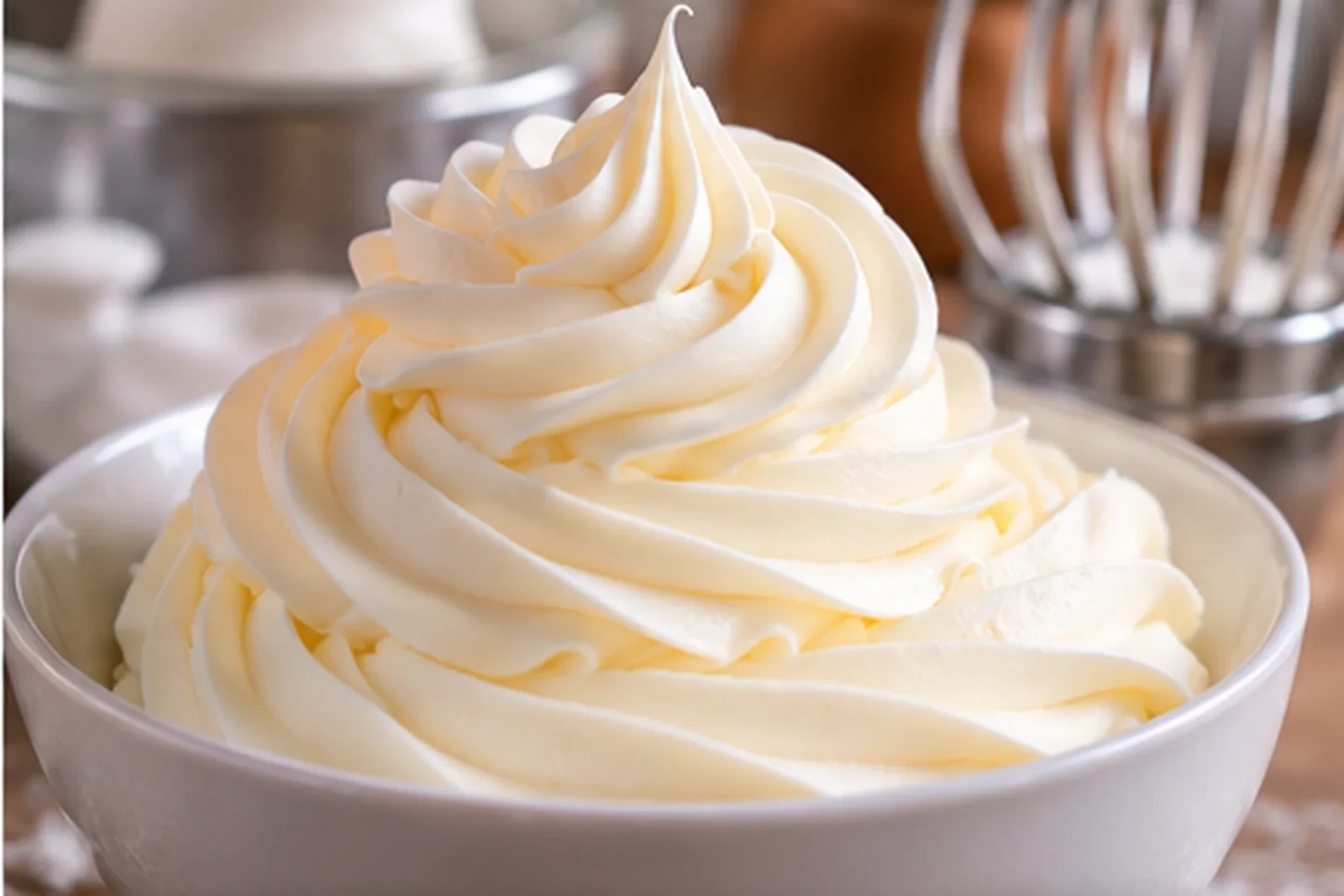
The finished buttercream should be silky, smooth and pipeable with no sugar grit, greasy puddles or cold butter lumps.
Ingredients
What you need
Meringue
- 248 g granulated sugar
- 105 g egg whites, about 3 large whites, room temperature
- 1/8 tsp fine salt
Buttercream
- 454 g unsalted butter, softened to cool room temperature, at least about 18°C / 65°F — It should yield to pressure without looking oily.
Finish
- 2 tsp vanilla extract — Adjust to taste.
Method
Cook by the cues, not just the clock
Heat whites and sugar
Whisk the sugar, egg whites and salt in a heatproof mixer bowl. Set over barely simmering water and whisk constantly until the sugar is dissolved and the mixture reaches 72°C / 161°F.
Whip and cool
Move the bowl to the mixer and whip on medium-high until the meringue forms stiff peaks and the bowl has cooled to only slightly warm or room temperature, usually 15 to 20 minutes.
Add butter gradually
Reduce to medium speed and add butter a few tablespoons at a time, allowing each addition to incorporate before adding more. Scrape the bowl midway through.
Finish emulsion
After all the butter is incorporated, whip on high for 1 to 2 minutes until light, fluffy and smooth, then beat in the vanilla.
Set consistency
If the buttercream is very soft, chill it for about 15 minutes, then rewhip. Apply to completely cooled cake layers.
Critical checkpoints
Stop here and check
At the water bath: is the sugar fully dissolved?
The warmed egg-white mixture feels smooth between clean fingertips and reads about 161°F.Keep whisking over gentle steam until both the temperature and smoothness checks pass.
Before butter: is the meringue bowl cool enough?
The bowl feels only slightly warm or near room temperature and the meringue holds stiff peaks.Keep whipping and cooling before adding butter if the bowl is still distinctly hot.
During butter: greasy-soft or cold-lumpy?
Greasy softness points toward excess warmth; hard butter flecks and lumps point toward a mixture that is too cold.Correct temperature gradually instead of changing the recipe ratio.
If yours looks different
Route the failure before changing the recipe
Why Is My Buttercream Grainy?
Why Is My Frosting Sliding Off My Cake?
After cooking
Storage, reheating & substitutions
Storage
Refrigerate covered for up to about a week or freeze for longer storage. Bring back toward room temperature and rewhip before using.
Reheating
Do not heat the finished buttercream directly. Temperature corrections should be gradual and controlled.
Substitutions
Different butter brands and room temperatures change softness. Use unsalted butter so the salt level remains controlled.
Evidence
Sources & methodology
Technical claims and method decisions are tied to sources. Recipe-specific advice is not presented as a universal food-science law.
- How to make Swiss ButtercreamKing Arthur Baking
King Arthur's technique guide emphasizes heating the whites and sugar above 160°F until the sugar is dissolved, then using butter that is soft but not greasy; butter that is too warm leads to limp frosting while very cold butter produces lumps.
publisherPassage verified - Swiss Meringue Buttercream RecipeKing Arthur Baking
King Arthur's current Swiss meringue buttercream heats egg whites, sugar and salt to 161°F over simmering water, whips until stiff and cooled, then adds room-temperature butter gradually before a final high-speed whip; soft frosting can be chilled briefly and rewhipped.
publisherPassage verified