Before you start
What this method is trying to achieve
Ravioli usually burst because the seal, sheet thickness or trapped air fails before the pasta itself is fully cooked. Keep unused dough covered, roll sheets thin and supple, use a firm drained filling and press from the filling outward to push air away before cutting each piece.
Success looks like
Know the target before you cook
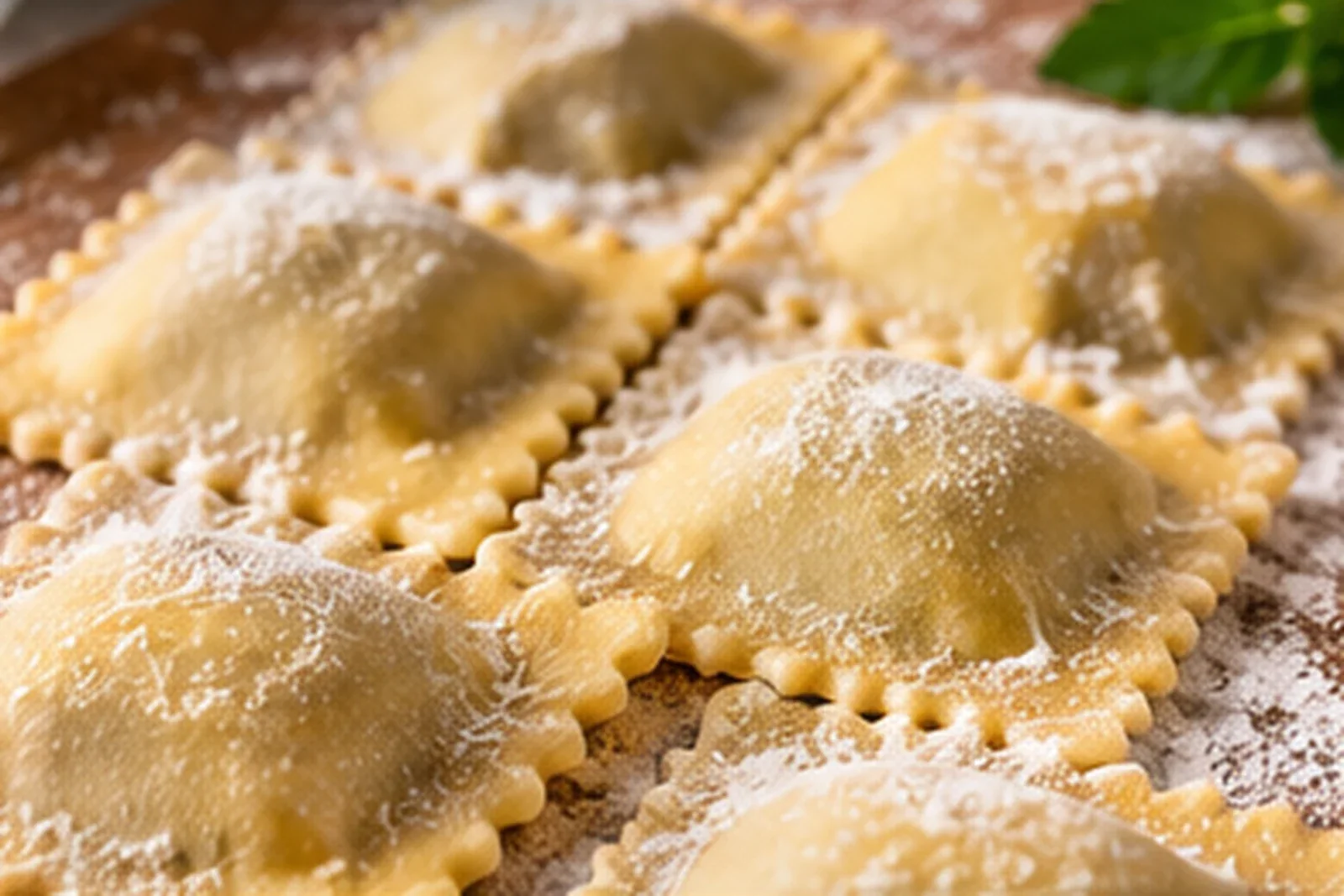
The ravioli should have thin tender pasta around a creamy filling, remain sealed through boiling and reach the sauce without splitting or leaking.
Ingredients
What you need
Pasta
- 1 batch fresh egg pasta dough, rested and ready to roll — CookClue's Fresh Egg Pasta Dough works here.
Filling
- 450 g whole-milk ricotta, well drained — Drain excess whey before mixing.
- 70 g Parmigiano-Reggiano, finely grated
- 1 large egg
- 2 tbsp fresh parsley, finely chopped
- 1/4 tsp fresh nutmeg, finely grated — Optional.
Seasoning
- kosher salt and black pepper — Season filling to taste.
Assembly
- semolina flour — For dusting trays.
Method
Cook by the cues, not just the clock
Make filling
Mix the well-drained ricotta, Parmigiano, egg, parsley and nutmeg. Season lightly and refrigerate while the pasta is rolled.
Roll thin sheets
Divide the rested pasta dough into manageable pieces and keep unused portions covered. Roll progressively thinner until suitable for filled pasta, generally around setting 5 or 6 on many machines.
Portion filling
Lay a sheet flat and place small mounds of filling with at least 5 cm / 2 inches between them. Lightly moisten only the sealing area if the dough needs help adhering.
Expel air and seal
Cover with another sheet or fold the sheet over. Starting close to each mound, press outward with your fingers to remove trapped air, then press the perimeter firmly before cutting.
Cook gently
Cook in generously salted boiling water without crowding until the pasta is tender, usually 3 to 4 minutes for freshly made medium ravioli. Lift with a slotted spoon into sauce.
Critical checkpoints
Stop here and check
Before sealing: is the filling firm rather than watery?
Each spoonful keeps its shape and no free whey is pooling in the bowl.Drain the ricotta longer before filling if necessary.
At sealing: did you push trapped air away?
The pasta hugs the filling closely with no obvious balloon-like pockets.Press from the filling outward before completing the perimeter seal.
During boiling: seam opening or dough cracking?
A seal peels apart or the pasta itself splits and releases filling.Use CookClue's ravioli-burst-open diagnosis; if the raw dough was already cracking, also check the pasta-dough-crumbly diagnosis.
If yours looks different
Route the failure before changing the recipe
Why Do My Ravioli Burst Open?
Why Is My Pasta Dough Crumbly?
After cooking
Storage, reheating & substitutions
Storage
Cook the ravioli soon after shaping or freeze them individually on a semolina-dusted tray before transferring to a freezer container.
Reheating
Reheat cooked ravioli gently in sauce rather than boiling them again.
Substitutions
Fresh pasta sheets can replace homemade dough. Whatever sheet you use must remain flexible enough to seal without cracking.
Evidence
Sources & methodology
Technical claims and method decisions are tied to sources. Recipe-specific advice is not presented as a universal food-science law.
- Basic Ravioli with a Butter-Sage SauceAnne Burrell / Food Network
Anne Burrell's ravioli method rolls pasta progressively thinner, uses water sparingly as glue, presses around the filling to remove trapped air, seals before cutting and cooks the ravioli gently in boiling water.
publisherPassage verified - Homemade Cheese Ravioli with Garlic ButterFood Network
Food Network's current homemade cheese ravioli pairs fresh egg pasta with a ricotta and Parmigiano filling and reinforces keeping the filled pasta thin and properly sealed.
publisherPassage verified