Before you start
What this method is trying to achieve
Caesar dressing succeeds or fails during emulsification. Build a smooth yolk-mustard-anchovy base first, then add the oil in a thin controlled stream until the dressing becomes creamy. Water is a final adjustment, not a starting ingredient.
Success looks like
Know the target before you cook
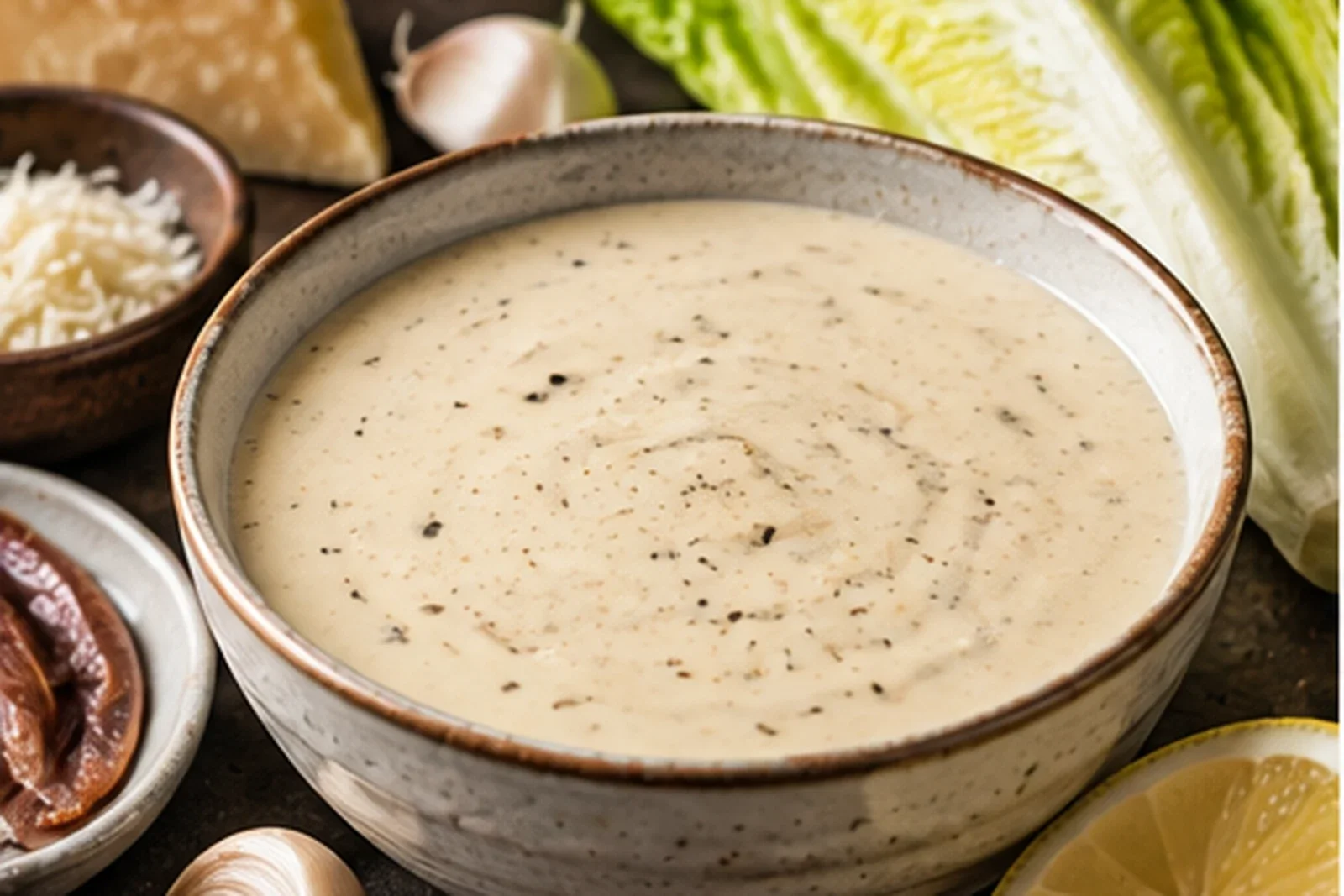
The dressing should be creamy, glossy and thick enough to cling to a romaine leaf while still flowing from a spoon.
Ingredients
What you need
Base
- 1 pasteurized egg yolk
- 2 anchovy fillets, finely minced and mashed
- 1 clove garlic, finely grated
- 1 tsp Dijon mustard
- 1 tbsp fresh lemon juice
Emulsion
- 120 ml extra-virgin olive oil
Finish
- 35 g Parmesan, finely grated
- 1 pinch kosher salt
- 1 pinch freshly ground black pepper
- 1 tsp cold water — only if needed to thin the finished dressing
Method
Cook by the cues, not just the clock
Build base
Mash anchovy and garlic to a smooth paste, then whisk with the pasteurized yolk, Dijon and lemon juice.
Start emulsion
Whisk constantly while adding the first third of the olive oil drop by drop or in a very thin stream.
Finish emulsion
Once the dressing has visibly thickened, continue adding the remaining oil in a thin steady stream while whisking.
Season
Whisk in Parmesan, salt and pepper. Taste before adding more lemon or water.
Adjust and chill
If the finished dressing is too thick, whisk in cold water 1 teaspoon at a time. Chill until ready to use.
Critical checkpoints
Stop here and check
Early oil: is an emulsion forming?
The base becomes thicker and creamier as the first oil is incorporated.Slow the oil stream if it stays watery or oily.
Before water: does it cling to a leaf?
A spoonful coats romaine rather than running straight off.Add water only if the dressing is genuinely too thick.
Caesar dressing too thin?
The dressing will not build body or becomes oily and watery.Use caesar-dressing-too-thin to separate oil-rate, dilution, ratio and broken-emulsion causes.
If yours looks different
Route the failure before changing the recipe
After cooking
Storage, reheating & substitutions
Storage
Refrigerate promptly in a clean covered container and keep cold. Use pasteurized egg yolk because the dressing is not thoroughly cooked.
Reheating
Not applicable. Serve chilled or cool.
Substitutions
Use anchovy paste instead of fillets if preferred. A neutral oil can replace part of the olive oil for a milder flavor.
Evidence
Sources & methodology
Technical claims and method decisions are tied to sources. Recipe-specific advice is not presented as a universal food-science law.
- The Best Caesar SaladFood Network Kitchen
Food Network combines anchovy paste, egg yolk, Dijon and lemon, then slowly drizzles in olive oil until emulsified and uses water only by teaspoons if needed to thin.
publisherPassage verified - What You Need to Know About Egg SafetyU.S. Food and Drug Administration
FDA advises using pasteurized shell eggs or pasteurized egg products for Caesar dressing when the egg remains raw or undercooked.
governmentPrimary source