Before you start
What this method is trying to achieve
Brown gravy is controlled by two transitions: flour must be fully dispersed in fat before liquid arrives, and stock must be added gradually enough that the roux stays smooth. The final simmer develops body without extra dry flour.
Success looks like
Know the target before you cook
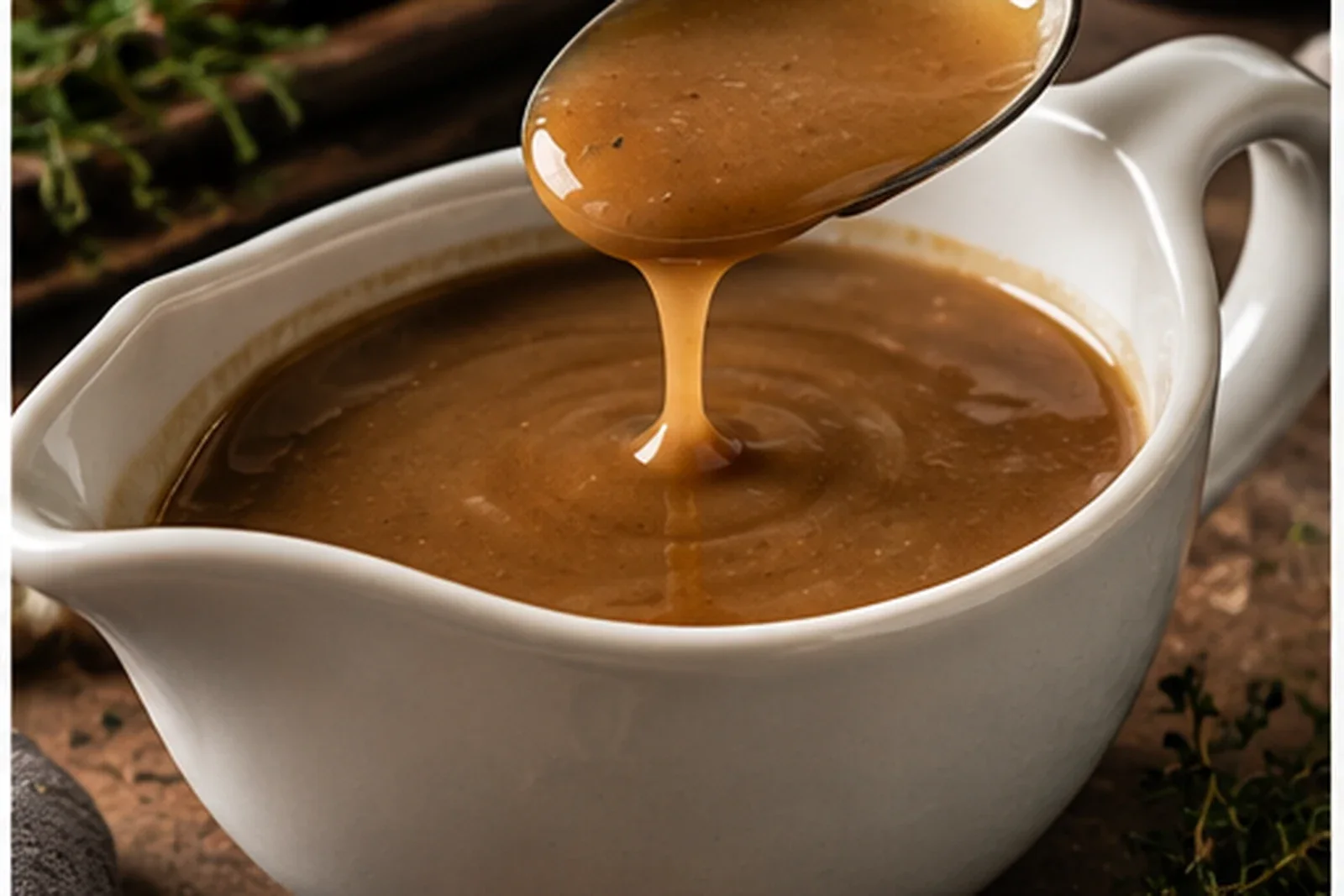
The gravy should be smooth and glossy, coat the back of a spoon and pour in a steady ribbon without flour lumps, oily separation or broth-like thinness.
Ingredients
What you need
Roux
- 60 g unsalted butter or beef fat
- 60 g all-purpose flour
Liquid
- 720 ml low-sodium beef stock, heated
Flavor
- 1 tsp Worcestershire sauce
- 1 tsp Dijon mustard
Seasoning
- 0.5 tsp kosher salt — adjust after simmering
- 0.25 tsp freshly ground black pepper
Method
Cook by the cues, not just the clock
Make roux
Melt the butter over medium heat, add flour and whisk until completely smooth. Cook 3 to 4 minutes until lightly browned and nutty.
Add stock gradually
Add hot stock in small additions at first, whisking each one completely smooth before adding more.
Bring to thickening heat
Once all stock is incorporated, bring the gravy to a brief boil while whisking, then reduce to a gentle simmer.
Simmer
Simmer 8 to 10 minutes, whisking occasionally, until glossy and spoon-coating. Add Worcestershire and Dijon.
Season and finish
Season with salt and pepper. Strain only if small lumps remain, then serve hot.
Critical checkpoints
Stop here and check
Before stock: roux smooth?
The flour is fully dispersed in the fat with no powdery patches.Whisk the roux smooth before adding liquid.
After stock: spoon-coating?
The simmered gravy leaves an even film on the back of a spoon.Continue simmering before adding more flour.
Lumpy or thin?
The gravy has flour clumps or stays broth-like after the intended simmer.Use gravy-lumpy or gravy-too-thin according to the visible failure.
If yours looks different
Route the failure before changing the recipe
Why Is My Gravy Lumpy?
Why Is My Gravy Too Thin?
Why Is My Gravy Greasy?
After cooking
Storage, reheating & substitutions
Storage
Cool promptly and refrigerate covered. Gravy will thicken when chilled.
Reheating
Warm gently while whisking in beef stock a little at a time until the original spoon-coating consistency returns.
Substitutions
Unsalted butter can replace roast fat. Chicken or turkey stock makes a lighter gravy with a different flavor.
Evidence
Sources & methodology
Technical claims and method decisions are tied to sources. Recipe-specific advice is not presented as a universal food-science law.
- Brown GravyFood Network / Guy Fieri
Food Network cooks flour in clarified butter into a roux, then whisks it into boiling beef stock until the gravy reaches the intended consistency.
publisherPassage verified - The Best GravyFood Network Kitchen
Food Network makes a roux from measured fat and flour, adds hot broth gradually while whisking and simmers until thick.
publisherPassage verified