Before you start
What this method is trying to achieve
Immersion-blender mayonnaise is fast because the geometry of a narrow jar controls how the oil meets the egg-and-lemon phase. The first seconds matter: keep the blender head planted on the bottom until the mixture below it turns thick and pale, then lift slowly to pull the remaining oil into the emulsion.
Success looks like
Know the target before you cook
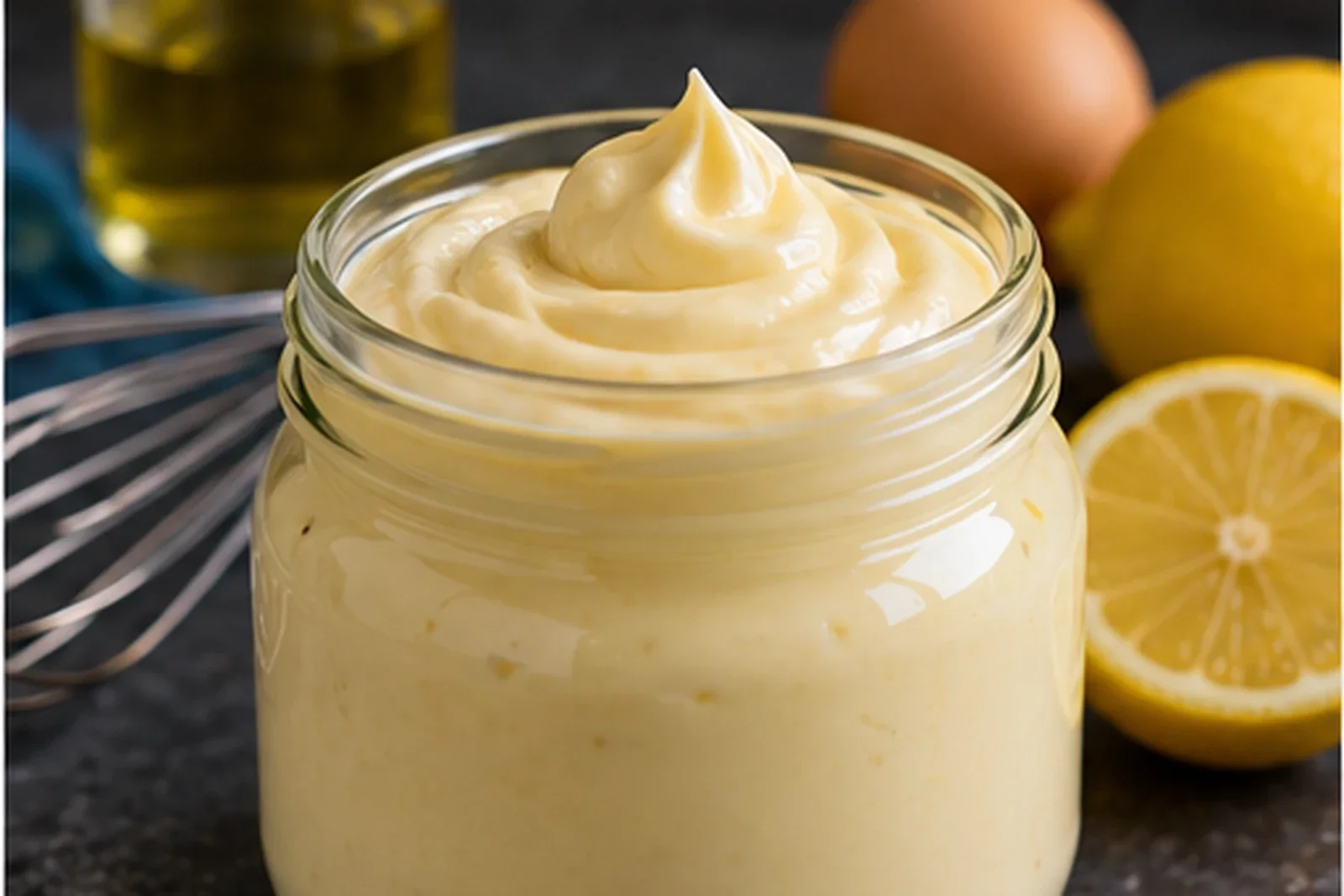
The mayonnaise should be thick, pale and glossy, holding soft peaks rather than pouring like salad dressing. No clear oil should remain separated around the edges.
Ingredients
What you need
Emulsion
- 1 large pasteurized whole egg — FDA recommends pasteurized eggs for mayonnaise that is not thoroughly cooked.
- 1 tbsp fresh lemon juice
- 1 tsp Dijon mustard
- 1 small clove garlic, minced — Optional.
- 240 ml neutral vegetable or canola oil
Seasoning
- kosher salt — To taste.
Method
Cook by the cues, not just the clock
Choose the vessel
Use a tall narrow jar only slightly wider than the head of your immersion blender. Add the pasteurized egg, lemon juice, mustard and garlic, then pour the oil on top and let the layers settle for several seconds.
Anchor blender
Place the blender head flat on the bottom of the jar so it covers the egg mixture beneath the oil. Start blending at high speed without moving the blender.
Lift slowly
Once the bottom portion has emulsified, tilt and raise the blender very slowly so the remaining oil is drawn into the thick base. Continue only until no clear oil remains.
Season
Taste and add salt. If you want a slightly looser mayonnaise, blend in a teaspoon of water or lemon juice at a time.
Critical checkpoints
Stop here and check
Before blending: is the jar narrow enough?
The immersion-blender head nearly spans the jar, leaving only a small gap around it.Switch to a narrower vessel before starting if the oil can flow freely around a much smaller blender head.
First 10 to 20 seconds: did a pale thick base appear?
The mixture trapped under the blender turns opaque and thick while clear oil still sits above it.Keep the blender anchored until that base exists; lifting too early is a common path to runny mayonnaise.
After blending: thick emulsion or oily liquid?
The finished mayonnaise should hold soft peaks and show no clear separated oil.If it remains runny, use CookClue's mayonnaise-won't-thicken diagnosis before adding more ingredients.
If yours looks different
Route the failure before changing the recipe
After cooking
Storage, reheating & substitutions
Storage
Keep refrigerated in a clean covered container and use promptly. Do not leave homemade mayonnaise at room temperature for extended periods.
Reheating
Do not heat mayonnaise as a reheating method; keep it refrigerated and serve cold or at cool room temperature for brief service.
Substitutions
White wine vinegar can replace lemon juice for a different acidity profile. Use a neutral oil for a familiar mayonnaise flavor; strongly flavored extra-virgin olive oil changes the taste substantially.
Evidence
Sources & methodology
Technical claims and method decisions are tied to sources. Recipe-specific advice is not presented as a universal food-science law.
- Two-Minute MayonnaiseSerious Eats
Serious Eats' immersion-blender mayonnaise method combines egg, lemon juice, Dijon mustard and neutral oil in a narrow vessel, keeps the blender head firmly on the bottom until an emulsion forms, then raises it to incorporate the remaining oil.
publisherPassage verified - Assuring the Safety of Eggs and Menu and Deli Items Made From Raw, Shell EggsU.S. Food and Drug Administration
FDA guidance recommends substituting pasteurized eggs or egg products for raw shell eggs in preparations such as mayonnaise and hollandaise when they are not thoroughly cooked.
governmentPrimary source