Before you start
What this method is trying to achieve
A stable cheese sauce starts before the cheese goes in. Cook a pale roux so the flour can thicken the milk without tasting raw, add the milk gradually while whisking, and only then lower the thermal stress on the cheese. Off-heat cheese incorporation is the critical step that helps prevent a grainy or oily finish.
Success looks like
Know the target before you cook
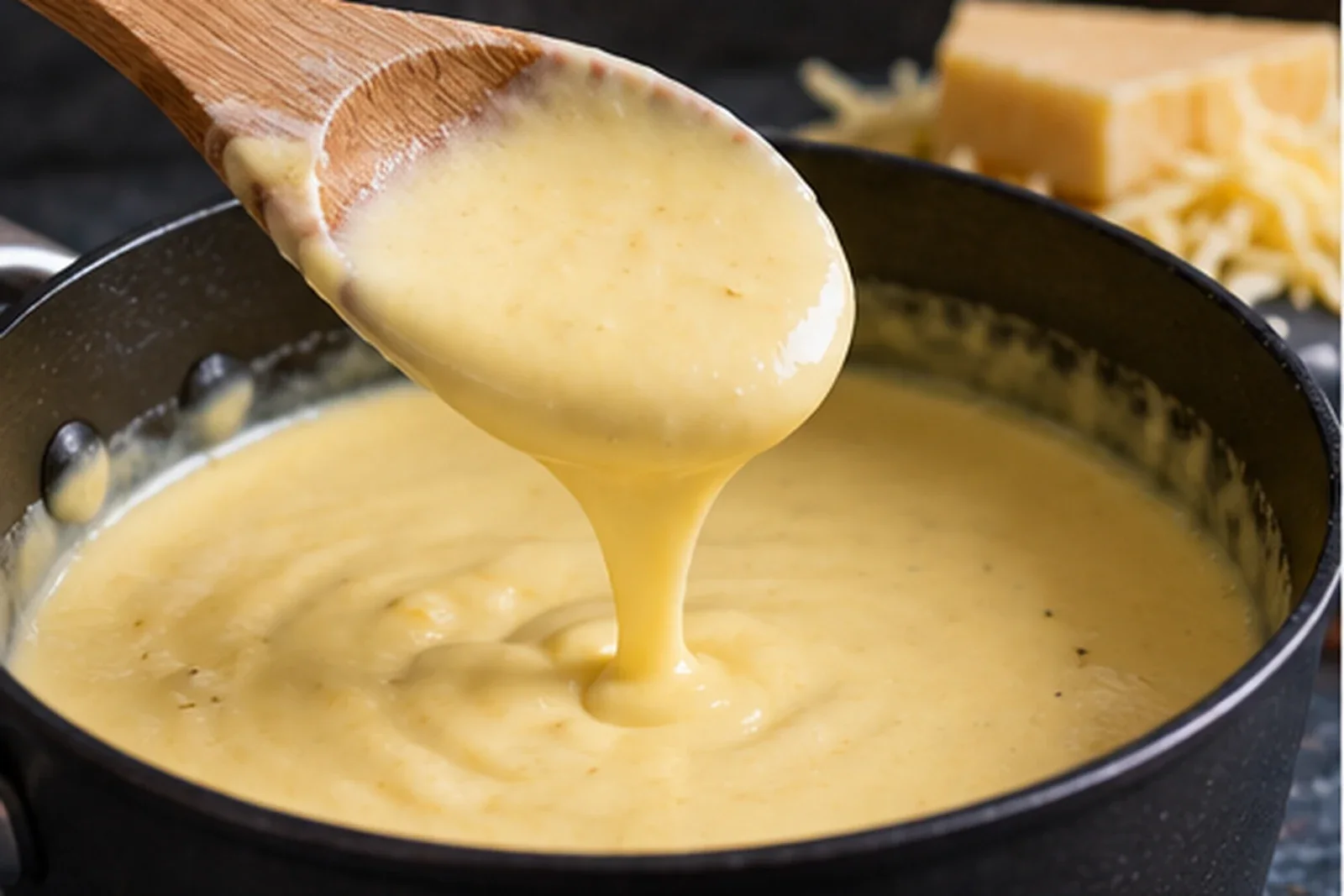
The sauce should be glossy and smooth enough to coat the back of a spoon, with no gritty curds, stringy clumps or visible slick of separated butterfat.
Ingredients
What you need
Roux
- 43 g unsalted butter — About 3 tablespoons.
- 30 g all-purpose flour — About 1/4 cup, spooned lightly.
Sauce
- 720 ml whole milk, warmed — Warm milk incorporates more smoothly into the roux.
- 1 tsp Dijon mustard
- 115 g cream cheese, softened — Supports a creamy body.
Finish
- 225 g sharp cheddar cheese, finely grated — Grate from a block for the most predictable melt.
- 45 g Parmesan cheese, finely grated
Seasoning
- kosher salt and black pepper — Season after tasting the cheese.
Method
Cook by the cues, not just the clock
Make roux
Melt the butter over medium heat. Whisk in the flour and cook, whisking often, until the mixture becomes a smooth pale paste and loses its raw-flour smell, about 2 to 3 minutes.
Add milk gradually
Whisk in the warm milk in several additions, fully smoothing each addition before adding more. Bring the sauce to a gentle simmer and cook, whisking, until it coats the back of a spoon.
Flavor base
Whisk in the Dijon and cream cheese until the base is completely smooth. Reduce the heat to low, then remove the pan from the burner.
Add cheese off heat
Add the cheddar and Parmesan a handful at a time, whisking until each addition melts before adding the next. Taste and season.
Adjust
If the sauce is too thick, whisk in a little warm milk. If a warm sauce begins to look oily or separated, try whisking in a small splash of warm water before applying more heat.
Critical checkpoints
Stop here and check
Before the cheese: is the milk base smooth?
The sauce coats a spoon evenly with no flour lumps and no raw-flour smell.Keep whisking the base smooth before adding any cheese.
When cheese goes in: is the pan off active heat?
The sauce is hot but no longer boiling aggressively.Move the pan off the burner and let bubbling stop before incorporating the grated cheese.
Finished sauce: grainy, oily or smooth?
A smooth sauce looks cohesive and glossy; grainy particles or oil pooling indicate different failure modes.Use CookClue's grainy versus split cheese-sauce diagnoses so you apply the right rescue.
If yours looks different
Route the failure before changing the recipe
Why Is My Cheese Sauce Grainy?
Why Did My Cheese Sauce Split?
After cooking
Storage, reheating & substitutions
Storage
Cool promptly and refrigerate covered. The sauce thickens when chilled.
Reheating
Reheat gently over low heat with a splash of milk or warm water, whisking often. Avoid hard boiling.
Substitutions
A good melting cheese such as Gruyère can replace part of the cheddar. Very aged or low-moisture cheeses may melt less smoothly and can change the texture.
Evidence
Sources & methodology
Technical claims and method decisions are tied to sources. Recipe-specific advice is not presented as a universal food-science law.
- Cheese Sauce RecipeFood Network
Food Network notes that a warm cheese sauce that separates can often be brought back together by whisking in warm water, and recommends gentle reheating rather than aggressive heat.
publisherPassage verified - Perfect Cheese SauceFood Network
Food Network's cheese-sauce method builds a butter-flour roux, gradually whisks in milk and simmers the base, then removes the sauce from heat before whisking in the cheeses until smooth.
publisherPassage verified