Before you start
What this method is trying to achieve
Good gumbo starts with the roux, but the goal is not simply to make it as dark as possible. Stir until the flour-and-oil mixture is evenly deep brown and smells toasted, then add the trinity before any black specks appear. Add stock gradually, simmer long enough to concentrate the broth and judge the final body near the end rather than thickening blindly.
Success looks like
Know the target before you cook
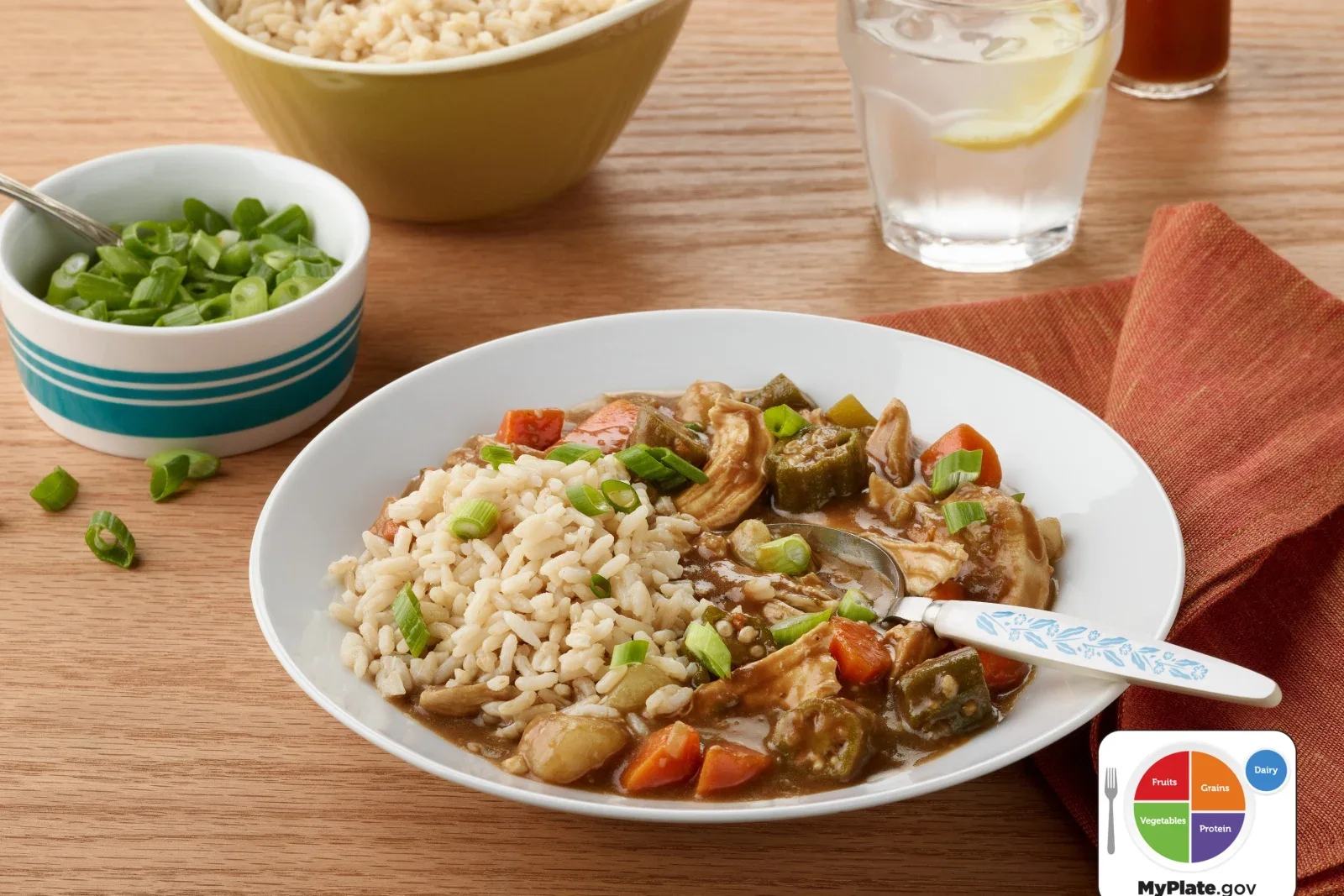
The finished gumbo should have a deep toasted aroma, tender chicken, browned sausage and a broth with enough body to coat the spoon lightly without becoming paste-like.
Ingredients
What you need
Roux
- 120 ml neutral oil — about 1/2 cup
- 65 g all-purpose flour — about 1/2 cup
Base
- 1 large yellow onion, diced
- 2 stalks celery, diced
- 1 large green bell pepper, diced
- 4 cloves garlic, minced
Meat
- 340 g andouille sausage, sliced — about 12 oz
- 680 g boneless skinless chicken thighs, cut into bite-size pieces — about 1 1/2 lb
Liquid
- 1.4 L low-sodium chicken stock, warmed — about 6 cups; hold back extra stock for adjustment
Seasoning
- 2 bay leaves
- 1 tsp smoked paprika
- 1/4 tsp cayenne pepper — or to taste
- 1 1/2 tsp kosher salt — plus more to taste
- 1/2 tsp black pepper, freshly ground
Finish
- 4 scallions, thinly sliced
- 1/4 cup flat-leaf parsley, chopped
- 1 tsp gumbo filé powder — optional; add off heat or at the table
Serve
- cooked long-grain white rice — for serving
Method
Cook by the cues, not just the clock
Brown the sausage and chicken
Heat the Dutch oven over medium heat. Brown the sausage until it renders some fat, then remove it. Brown the chicken briefly in batches and remove it as well; it will finish cooking later in the gumbo.
Cook the dark roux
Add the measured oil, then whisk in the flour. Cook over medium to medium-low heat, stirring continuously and scraping the entire bottom, until the roux becomes an even deep brown with a toasted, nutty aroma.
Add the trinity and stock
As soon as the roux reaches the target color, stir in onion, celery and bell pepper. Cook until softened, then add garlic briefly. Whisk in the warm stock gradually until the roux is fully dispersed, then add bay leaves, paprika, cayenne, salt and pepper.
Simmer and reduce
Return the sausage and chicken to the pot. Bring to a gentle simmer, then cook mostly uncovered for about 60 to 75 minutes, stirring occasionally, until the chicken is fully cooked and the gumbo has developed body.
Adjust, finish and serve
Skim excess surface fat if needed. If the gumbo is thinner than intended, continue a gentle uncovered simmer before adding any extra thickener. Stir in scallions and parsley. Remove from heat and add filé only if using. Serve over rice.
Critical checkpoints
Stop here and check
Roux checkpoint: dark or actually burnt?
A usable dark roux is evenly deep brown and smells toasted; black specks and acrid smoke indicate scorching.Use CookClue gumbo-roux-burnt-or-bitter if the roux develops black specks or harsh bitterness.
Mid-simmer checkpoint: reducing or staying diluted?
The broth should gradually gain body as water evaporates; a large loose volume that still tastes diluted needs more reduction.Keep the pot gently simmering uncovered and reassess before changing the thickening system.
Final checkpoint: spoon-coating but still ladleable?
Finished gumbo lightly coats the spoon and carries suspended meat and vegetables without becoming gravy-thick.Use CookClue gumbo-too-thin-or-watery if the finished pot remains loose after the intended simmer.
If yours looks different
Route the failure before changing the recipe
Why Is My Gumbo Too Thin or Watery?
Why Does My Gumbo Roux Taste Burnt or Bitter?
After cooking
Storage, reheating & substitutions
Storage
Cool leftovers promptly and refrigerate in shallow covered containers. Store rice separately when practical so it does not continue absorbing the gumbo.
Reheating
Reheat gently on the stovetop until steaming hot throughout. Add a small splash of stock or water only if the chilled gumbo has thickened more than desired.
Substitutions
Smoked sausage can replace andouille if needed, but flavor and heat will change. Filé powder is optional and should be used only as a finishing seasoning/thickener rather than boiled aggressively.
Evidence
Sources & methodology
Technical claims and method decisions are tied to sources. Recipe-specific advice is not presented as a universal food-science law.
- Chicken and Sausage GumboFood Network
Food Network cooks oil and flour while stirring constantly to a deep dark-brown roux, adds onion, celery and bell pepper, then combines with liquid and gives the gumbo an extended simmer before serving.
publisherPassage verified - Chicken and Smoked Sausage GumboFood Network / Emeril Lagasse
Emeril's method stirs oil and flour slowly and constantly to a chocolate-brown roux, adds the vegetable trinity and sausage, then stock, a long uncovered simmer and filé at the end.
publisherPassage verified - Safe Minimum Internal Temperature ChartUSDA Food Safety and Inspection Service
USDA FSIS lists 165°F / 73.9°C as the safe minimum internal temperature for all poultry.
governmentPassage verified