Before you start
What this method is trying to achieve
Good tomato soup should taste bright but not aggressively sour. Use a non-reactive pot, soften the onion, celery and garlic before adding tomatoes, simmer long enough to round the base, then blend with butter for a smooth rich finish.
Success looks like
Know the target before you cook
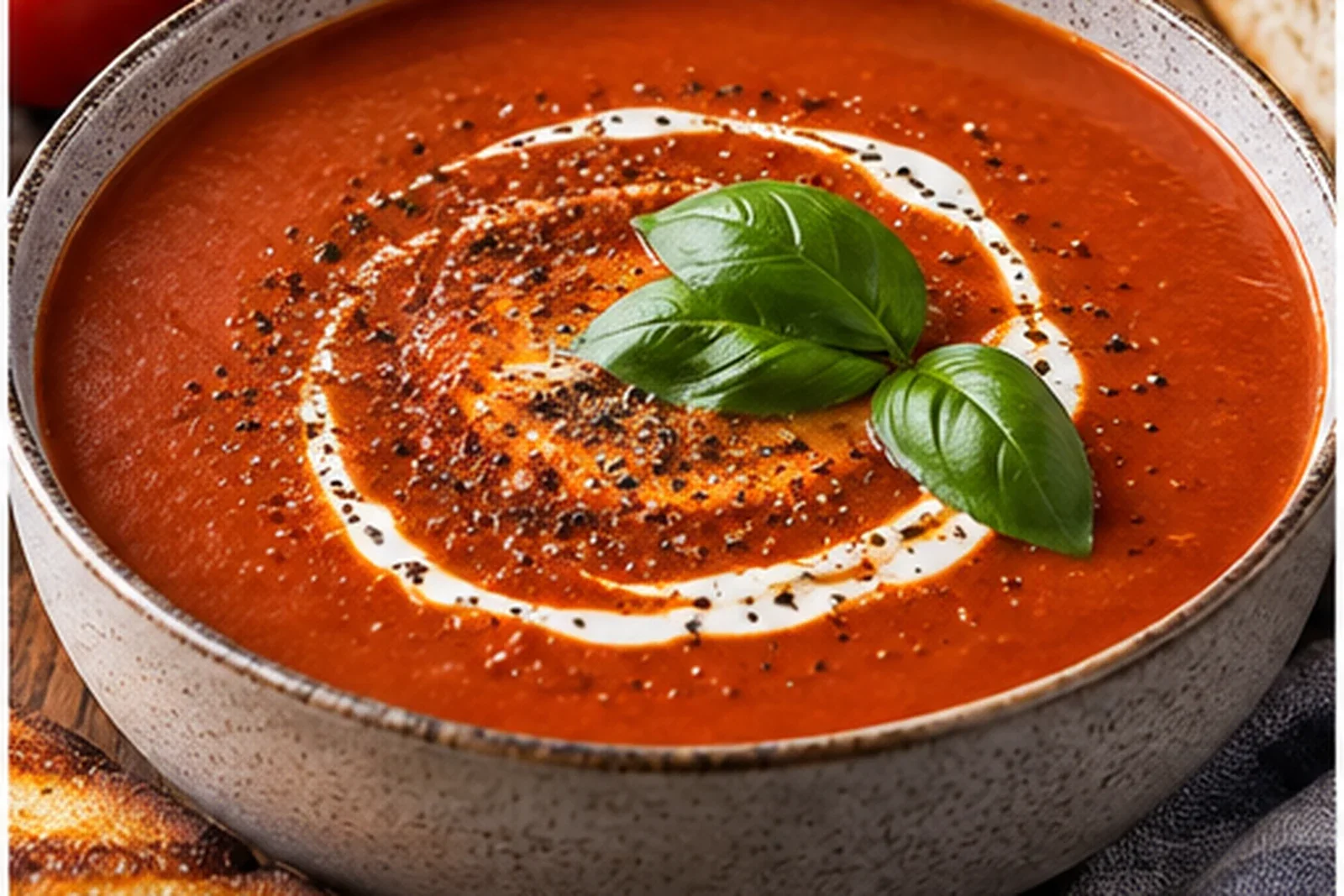
The soup should be velvety and tomato-forward with balanced acidity, no metallic edge and enough body to coat the spoon lightly.
Ingredients
What you need
Base
- 2 tbsp olive oil — Plus more to finish.
- 1 stalk celery, diced
- 1 small onion, diced
- 2 cloves garlic, minced
Tomato
- 2 28-oz cans whole peeled tomatoes, crushed by hand
Liquid
- 360 ml vegetable broth — About 1 1/2 cups.
Herbs
- 1 tsp fresh thyme leaves
Finish
- 56 g unsalted butter, divided — About 4 tablespoons.
Seasoning
- kosher salt and black pepper — To taste.
Method
Cook by the cues, not just the clock
Soften aromatics
Heat the olive oil in a non-reactive heavy pot over medium heat. Add celery, onion, garlic and a pinch of salt and cook until fully softened without browning, about 8 to 10 minutes.
Build soup
Stir in the crushed tomatoes, vegetable broth and thyme. Cover and bring to a simmer, then cook gently for about 60 minutes, stirring occasionally.
Cool briefly
Remove from the heat and let the soup cool for about 5 minutes before blender transfer.
Blend with butter
Working in batches, blend the soup with the butter until smooth, venting the blender safely. Return the soup to a clean pot.
Balance and serve
Season with salt and pepper, taste for acidity and finish each bowl with a small drizzle of olive oil.
Critical checkpoints
Stop here and check
Before tomatoes: aromatics fully soft?
Onion and celery are translucent and the garlic no longer smells raw.Give the base more time before adding tomatoes if it still tastes harsh.
Cookware non-reactive?
The pot is stainless steel, enameled cast iron or another non-reactive material.Avoid bare reactive metals with acidic tomato soup.
Soup too acidic or metallic?
The finished soup tastes harshly sour, bitter or metallic rather than pleasantly bright.Use CookClue's tomato-soup-too-acidic diagnosis to separate normal acidity, seasoning and cookware causes.
If yours looks different
Route the failure before changing the recipe
After cooking
Storage, reheating & substitutions
Storage
Cool promptly and refrigerate covered. The soup can also be frozen in suitable containers.
Reheating
Warm gently over medium-low heat and adjust seasoning after it is hot.
Substitutions
Low-sodium chicken broth can replace vegetable broth if a non-vegetarian soup is acceptable.
Evidence
Sources & methodology
Technical claims and method decisions are tied to sources. Recipe-specific advice is not presented as a universal food-science law.
- Best Tomato Soup EverFood Network
Food Network's tomato soup combines tomatoes with cooked onion, butter, savory seasoning, cream and fresh herbs, providing a second tested reference for balancing a tomato-forward soup.
publisherPassage verified - The Best Tomato SoupFood Network Kitchen
Food Network Kitchen softens celery, onion and garlic, simmers canned tomatoes with broth and thyme, then blends with butter; it also recommends non-reactive cookware because tomatoes are acidic.
publisherPassage verified