Before you start
What this method is trying to achieve
Hollandaise fails when heat and fat addition outrun the yolk emulsion. Keep the bowl over gentle steam without letting it touch the water, whisk continuously, and drizzle warm butter in slowly. If the bowl feels hot or the sauce turns grainy, move it off heat immediately before doing anything else.
Success looks like
Know the target before you cook
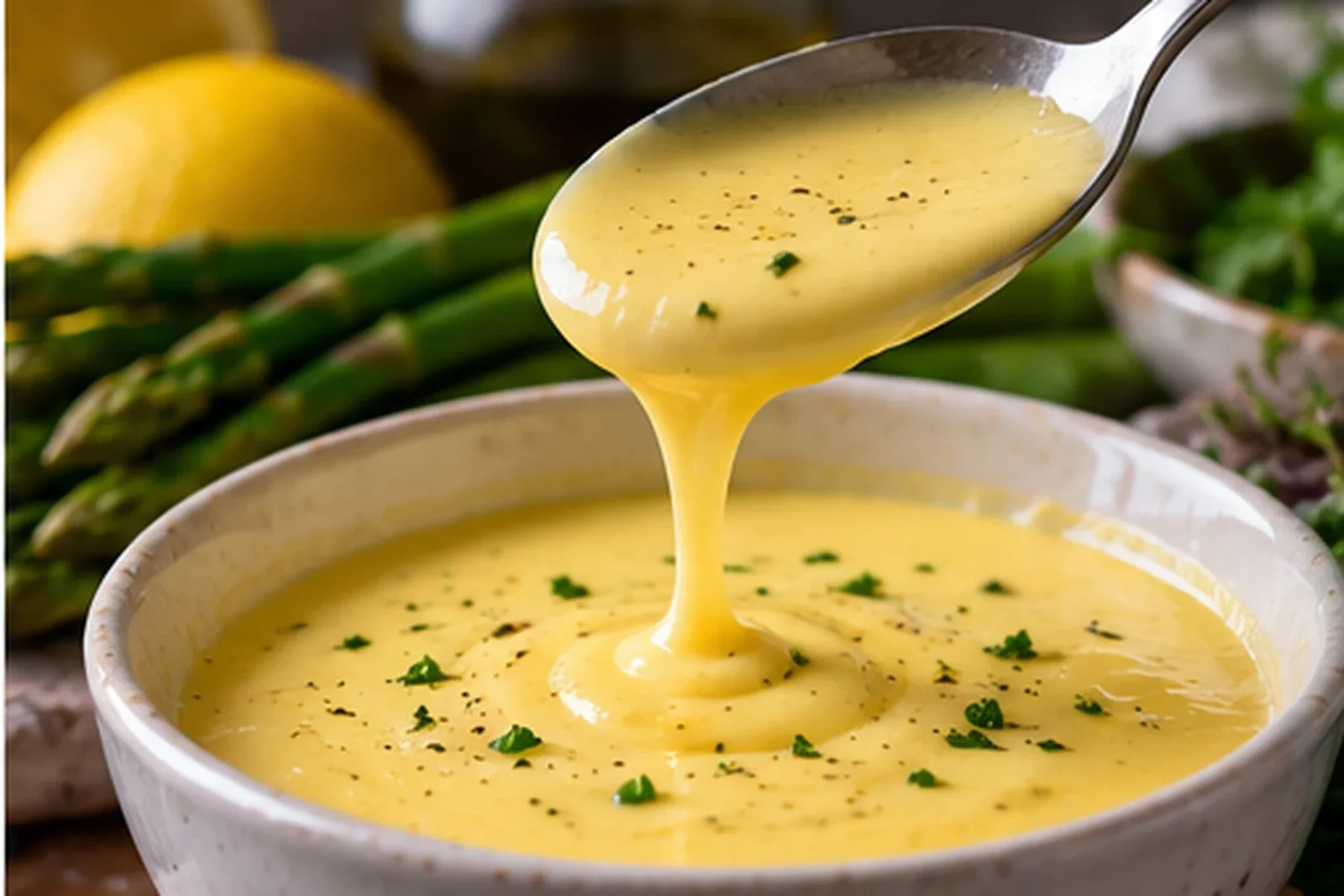
The sauce should be pale yellow, glossy and thick enough to coat a spoon while still flowing in a ribbon. It should show no scrambled egg particles and no slick of separated butter.
Ingredients
What you need
Yolk base
- 4 large pasteurized egg yolks — Use pasteurized yolks or pasteurized shell eggs for a sauce that may not be thoroughly cooked.
- 1 tbsp fresh lemon juice — Plus more to taste.
- 1 tbsp cold water
Emulsion
- 113 g unsalted butter, melted and cooled until warm, not hot — About 1/2 cup.
Seasoning
- 1/4 tsp fine salt — Adjust to taste.
- 1 pinch cayenne pepper — Optional.
Method
Cook by the cues, not just the clock
Set gentle steam
Bring a few centimeters of water to a bare simmer in a saucepan. Choose a heatproof bowl that sits over the pan without its bottom touching the water.
Whisk yolks
Whisk the pasteurized yolks, lemon juice and cold water in the bowl until combined. Set over the gentle steam and whisk constantly until the mixture is pale, slightly thickened and warm.
Emulsify butter
Take the bowl off the steam if necessary to control heat. While whisking constantly, drizzle in the warm melted butter very slowly at first. As the sauce thickens and stabilizes, the butter stream can become slightly faster.
Adjust consistency
When all the butter is incorporated, season with salt, cayenne and more lemon if needed. If the sauce is too thick, whisk in warm water a few drops at a time.
Early rescue
If the sauce becomes lumpy, grainy or just begins separating, remove it from the heat immediately and whisk in a few drops of warm water before deciding whether more intervention is needed.
Critical checkpoints
Stop here and check
Before butter: are the yolks warm and thickened, not scrambled?
The yolk mixture is pale and slightly thicker but remains perfectly smooth.If the bowl feels too hot, move it off steam and whisk until the temperature settles.
During butter addition: is every addition disappearing?
The sauce stays homogeneous as butter enters instead of leaving shiny pools on the surface.Slow the butter stream and keep whisking. Pause butter addition entirely if free fat begins appearing.
Finished sauce: ribboning or splitting?
A stable hollandaise flows in a smooth ribbon; a broken sauce looks oily, grainy or curdled.For a full break, use CookClue's hollandaise diagnosis rather than continuing to add butter.
If yours looks different
Route the failure before changing the recipe
Why Did My Hollandaise Break?
Why Won't My Mayonnaise Thicken?
After cooking
Storage, reheating & substitutions
Storage
Hollandaise is best served immediately. Do not rely on reheating a chilled finished sauce to restore its original emulsion.
Reheating
Avoid reheating over direct heat. If the sauce merely thickens while still warm, whisk in a few drops of warm water.
Substitutions
A small pinch of cayenne can replace white pepper. Use pasteurized egg yolks because hollandaise may not be thoroughly cooked.
Evidence
Sources & methodology
Technical claims and method decisions are tied to sources. Recipe-specific advice is not presented as a universal food-science law.
- Classic HollandaiseFood Network Kitchen
Food Network Kitchen's classic hollandaise keeps the bowl over gently simmering water without touching it, uses butter that is warm rather than hot, removes the bowl if it becomes too hot, and recommends whisking in a few drops of warm water if the sauce turns lumpy, grainy or starts separating.
publisherPassage verified - Assuring the Safety of Eggs and Menu and Deli Items Made From Raw, Shell EggsU.S. Food and Drug Administration
FDA guidance recommends substituting pasteurized eggs or egg products for raw shell eggs in preparations such as mayonnaise and hollandaise when they are not thoroughly cooked.
governmentPrimary source